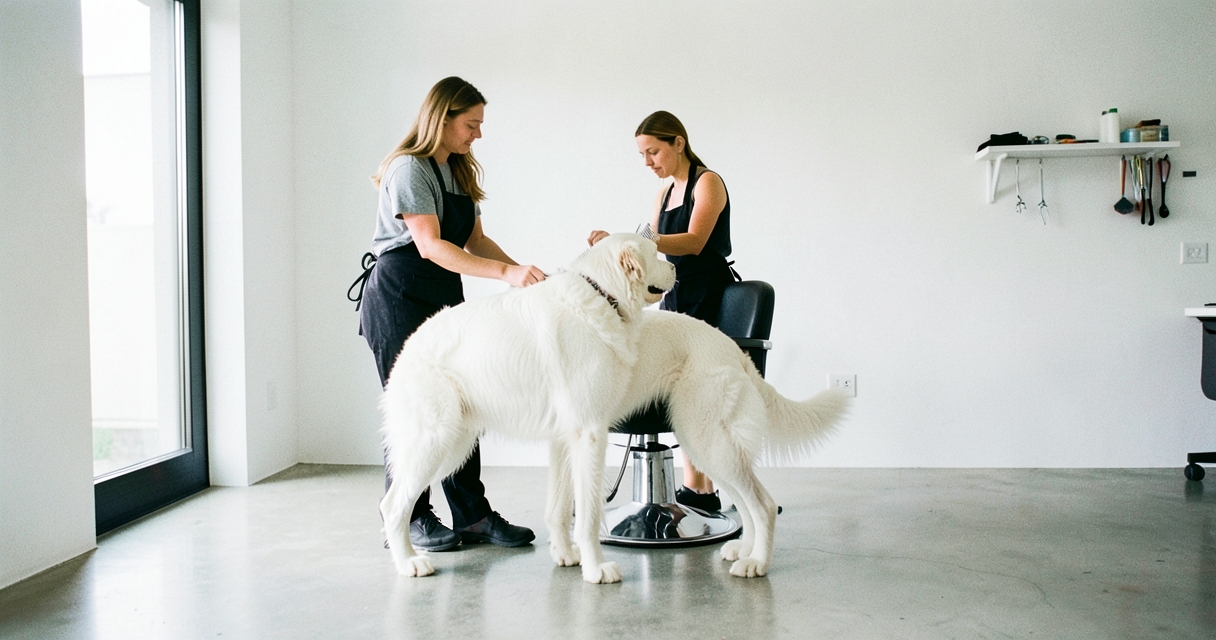
Open a photo of a Samoyed café in Japan. White dogs everywhere. Big smiles, enormous coats, a customer who seems to have fallen into a snowdrift.
“I want one!”
Then you remember the walks, the grooming, the veterinary bills, and the question of where a big dog would actually sleep.
That gap is the whole pitch. A Samoyed café lets you spend a short, bookable visit with the dogs without pretending that dog ownership is a weekend hobby.
Did these places really appear all at once?
The trend has a recent, traceable history. Samoyed cafe AL opened in Tokyo's Komazawa area in September 2023. Its operator said the idea came from seeing a Samoyed café in South Korea. A 2024 youth-trend report from SHIBUYA109 lab. also singled out Samoyed cafés as an experience-led concept arriving from Korea.
That does not tell us the total number of cafés in Japan; it is not an industry census. It does explain why a format that once sounded oddly specific has become a recognizable kind of outing.
The cafés are not all branches of one giant brand. More than one business has adopted the idea. The surprise is not that the same dog is everywhere; it is that the same experience can now be booked in different places.
Why Samoyeds?
The answer practically fits into one photo: bright white fur, dark eyes, a large body, and the famous upturned “Samoyed smile.” The Japan Kennel Club describes the breed as friendly, lively, and social.
But a friendly breed is not a promise that every individual dog wants attention all day. Some dogs want a nap, some want space, and a pretty photograph is no reason to ignore either.
There is also a simple economic reason for the appeal. Meeting a Samoyed for a short session does not require a pet-friendly home, years of daily exercise, a grooming routine, or a budget for veterinary care. A visitor pays for a chance to spend time around the dogs; the operator remains responsible for their everyday care.
In other words, the café is not selling a rental dog. It is selling an encounter with a dog someone is already responsible for.
The dogs cannot clock out by themselves
Here is where the fast-food comparison falls apart. If a snack becomes popular, a chain can order more ingredients. Dogs are not inventory.
Japanese animal-display guidance requires appropriate rest arrangements for dogs and cats on prolonged display, including access to a retreat or non-display periods. One Samoyed café described rotating its dogs out for rest during the day.
Visitors can do their part: do not chase a dog that walks away, do not wake one for a photo, and notice whether there is somewhere customers cannot follow the dogs.
The reason these cafés caught on is straightforward: people who cannot keep a large dog can still enjoy meeting one. But the visitor's hour ends long before the dog's day does.
A customer books a fluffy hour. The dog deserves a full life.